Variants of Android are also used on game consoles, digital cameras, PCs and other electronics. Install Android on VMware on Windows 10 – Download Latest Android ISO File. Now the Android-x86 is a project to port Android open source project to x86 platform, formerly known as “patch hosting for android x86 support”. Screenshot for Android-x86 64-Bit « Add or Remove Devices and Printers to This PC in Windows 10 Android-x86 64-Bit 9.0 R2 Android-x86 32-Bit 9.0 R2 » Comment Rules & Etiquette - We welcome all comments from our readers, but any comment section requires some moderation. Oracle VM VirtualBox Extension Pack. Free for personal, educational or evaluation use under the terms of the VirtualBox Personal Use and Evaluation License on Windows, Mac OS X, Linux and Solaris x-86 platforms.
- Android Virtualbox 64bit Iso Downloads
- Android Virtualbox 64bit Iso Download Windows 7
- Android Virtualbox 64bit Iso Download Iso
- Android Virtualbox 64bit Iso Download 64-bit
- Android Virtualbox Download
Android is a well-known operating software that runs on most of the mobile devices that are built-in in today’s world. The biggest advantage with such a software is that you can integrate the same to any kind of device that has a user-interface. The Android firmware is a sophisticated platform that allows many of the developers to have an environment to develop applications that can be run in the environment.
The biggest deal with the software is that it is a very flexible one and that is the only reason why Android has compromised security compared to another similar type of operating system. Because if you were to remove the flexibility part of any system, it would directly affect the compatibility of the system limiting the usage to a certain level.
As android is a popular choice among many, this factor indirectly increases the number of platforms that needs to support the same. There are a lot of platforms out there where you can install the Android Operating System and get things done but the most popular option would be to run the same on a desktop. This will help you in the development of applications that are feasible in the same and also will help you in understanding the performance of the application in such a system.
License
Installer ISO
File Size
719MB / 909MB
Version
9.0
Developer
Open Source
Overview
Android Virtualbox 64bit Iso Downloads
The android operating system is a high-demand operating system that is used by many to develop applications in the same environment. The operating system also has a technical liability that the system can easily root out any problems that arise with your project, giving you an upper hand in developing a conventional operational application. There is a lot of inbuilt features in the software framework of the Android operating system that will help you in creating applications with lesser bugs when released.
The biggest dream of any developer is to earn revenue from the applications that he is developing in the Android suite and this is basically done with the help of running the Android operating system on the Desktop.
There are a lot of features that make the Android ISO a credible platform to run applications that will benefit your day to day life. Some of the features include:
1. Support external keyboard
When you are working with an operating system on a desktop, you would definitely need a keyboard to input data into the system. Most of the operating systems in Niche as same as that of Android don’t support the same making them almost very difficult for the user to work on such an environment. The advantage with such a feature is that you will not have to depend on internal keyboard supporting software to input your data saving you time and improving efficiency in the work that you do.
2. Debug Mode
Whenever you are on the verge of developing new software or an application, you are always on the constant verge of creating bugs and errors in the application. These bugs and errors won’t hamper the working of your system but will greatly reduce the credibility of the application once it gets launched.
This is a serious red-flag for any developer and that means that it will greatly put the reputation of your name as an application developer online. with a debug mode, you can easily troubleshoot the errors that are available in your system and make sure that you render them free of bugs as well.
3. Supports external storage as well
We all know the importance in storing data and that means that you would have to rely upon the in-built memory of the system that you are working the software on. If your software doesn’t support external storage support that would directly put pressure on the system performance and greatly affect the performance efficiency of the system.
How to install the Android ISO on the virtual machine
The process of installing the Android ISO on a virtual machine is quite easy. All the pre-requisites that you need to have is desktop hardware that can support a virtual machine.
- Download and install the recent version of a virtual machine probably that are available in the ISO river page so that you will not have any problems in integrating the Android ISO and the virtual machine.
- Once you are done with the download of the virtual machine, configure all the requirements of the system and ensure that the type of system that you are trying to run the system is mentioned correctly.
- Once all that is done, boot the downloaded Android ISO into the virtual system preferably as an ISO image and get the process done.
- Once you are done with the configuration process and the downloading and booting process. Reboot the whole system and boot it to the Android operating system and there you are set up with an Android Operating system on a virtual machine.
There are a lot of virtual machine providers out there that could help you with the same, all you have to do is render the correct system type according to your hardware setup.
You can download the Android ISO as well from our page. Make sure that you have set up a virtual machine in your system before you set up the system. You can download the same from our website as well.
Download and Install Android ISO Latest Version on Virtual Machine - ISORIVER
There are a lot of virtual machine providers out there that could help you with the same, all you have to do is render the correct system type according to your hardware setup. You can download the Android ISO as well from our page. Make sure that you have set up a virtual machine in your system before you set up the system. You can download the same from our website as well.
Price Currency: USD
Operating System: Android
Application Category: OS
Hello,I'm new to using VMs and to VirtualBox. I'm using VirtualBox 6.0.4 on Windows 8.1 Pro 64-bit OS. I've successfully installed VMs for Linux Mint (Cinnamon) and for Ubuntu 18.04 - they boot up and run. My physical hardware is an AMD Athlon II x440 CPU on an ASUS mobo with 16GB RAM and two SATA hard drives (1TB and 3TB). I've placed the VM folders on the 3TB drive (e:).
I've been trying to install an Android-x86 VM without success so far. Most recently, I'm trying to install android-x86_64-8.1-r1.iso from android-x86 downloads. I've also tried 7.1, 6.1 and 4.4. They started up and then hung displaying a blank screen with a prompt reading something like x-86#.
I've googled, found many tutorials to install an android VM in virtualbox, followed them but without success. I notice that the settings changed from one tutorial to another. I realize that VirtualBox does not support android but that it can be installed as a VM as evidenced by others successfully doing so. The VirtualBox documentation points out that the guest extentions under devices will not install because VirtualBox does not officially support android.
Obviously, I'm doing something wrong but don't know where I'm going wrong. Can someone spot where? Here are the steps I took to try installing on my pc using android-x86-64-8.1-r1.iso
0. started VirtualBox Manager and chose New VM
Android Virtualbox 64bit Iso Download Windows 7
1. I gave the VM a name
2. chose type linux
3. chose version: other linux (64-bit)
4. memory 4096 MB
5. created a virtual hard disk
6. chose VDI (VirtualBox Disk Image) file type
7. chose dynamically allocated storage
8. accepted name
9. file size 8GB
next, I opened the settings option
General - accepted as is
System -
MOTHERBOARD
base memory: 4096
changed chipset to ICH9 (VirtualBox document said the other setting was becoming obsolete)
pointing device: USB tablet
enabled I/O APIC
disabled EFI (special OSes only)
Android Virtualbox 64bit Iso Download Iso
enabled hardware clock in UTC timePROCESSOR
left processors at 1
left execution cap at 100%
enabled PAE/NX
disabled Nested VT-x/AMD-V
ACCELERATION
paravirtualization interface - default
enable VT-x/AMD-V
enable nested paging
DISPLAY
video memory: 128 MB
monitor count: 1
scale factor: 200%
graphics controller: VBoxSVGA
acceleration: did not use
STORAGE
controller IDE
android8_00.vdi
empty
clicked on 'empty', found and opened android-x86-64-8.1-r1.iso
clicked on settings OK button
Android Virtualbox 64bit Iso Download 64-bit
STARTED the VM
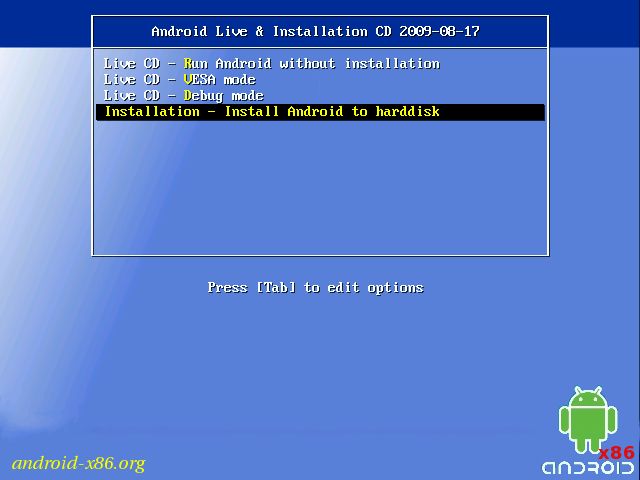
installation screen appears
chose 'installation Install Android-x86 to harddisk
chose create/modify partition
did not use GPT
created new partition
chose primary
 used all MB (8 GB)
toggled Bootable
wrote partition table (typed yes)
verified what I did anc quit screen
clicked OK on choose partition screen
reformated with ext4 (other choices were ntfs and fat32)
installed boot loader GRUB
installed /system directory as read-write
receive message that android-x86 installed successfully
and have two choices:
run android-x86
reboot
Android Virtualbox Download
I do get confused at this point. All of the tutorials say that the disk with the ISO file needs to be ejected at this point, but none of them demonstrated how. One tutorial showed a CD/DVD icon on the screen, but nothing like that appears on mine. The closest thing I could think of was to pause the VM, go to devices and remove, then unpause the VM and choose reboot. That did not seem to work.
Help pointing out what I'm doing wrong will be appreciated. I think I've been trying various things for a few days now and think I'm just going in circles now.
I'm coming from a Windows environment. So I install GRUB as part of the installation steps but have never used it nor am I sure how to start it if I do need to use it. My installations of Mint Cinnamon and Ubuntu were fine and did not need any tweaking.
Another question deals with my choice of pointing device. It's not clear if I should be using the PS/2 option or USB tablet.
Thanks in advance.
John